Symposia and Mini Symposium
Join us to explore today’s science that shapes tomorrow’s care. See our transformative line up below.
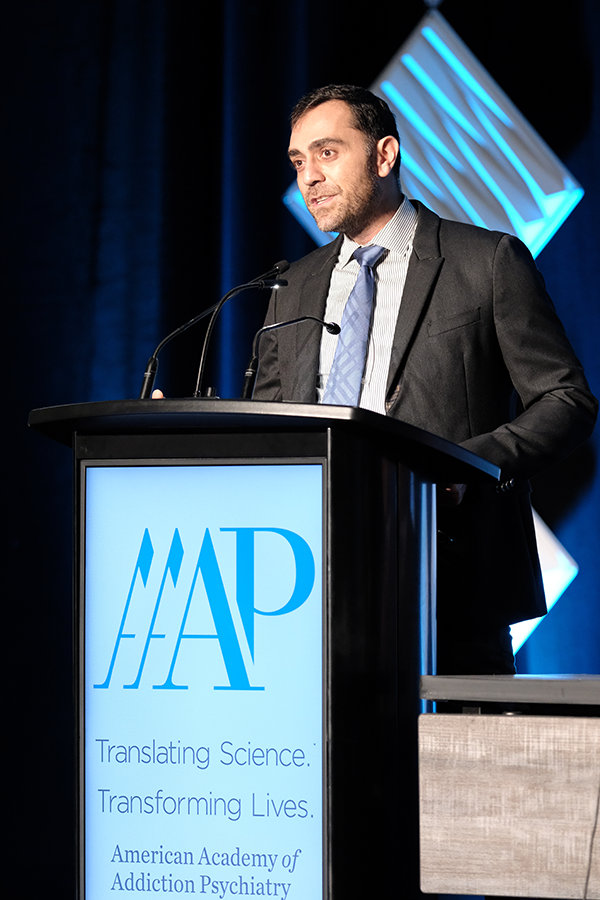
Symposium I - From Metabolism to Addictions: Repurposing GLP-1 Therapies for Alcohol and Other Substance Use Disorders
Scheduled for Thursday, November 12, 2026, 9:00 AM - 10:40 AM
Chairpersons: Lorenzo Leggio, MD, PhD, NIDA Clinical Director and Deputy Scientific Director; and Joji Suzuki, MD, Program Director, BWH Addiction Medicine Fellowship Program, Brigham and Women's Hospital
Presenters: Lorenzo Leggio, MD, PhD, NIDA Clinical Director and Deputy Scientific Director; Luba Yammine, PhD, Associate Professor, University of Texas Health Science Center at Houston, Dept of Psychiatry and Behavioral Sciences; Manish Jha, MD, Associate Professor of Psychiatry and O’Donnell Clinical Neuroscience Scholar at UT Southwestern Medical Center, Dallas, TX; and Joji Suzuki, MD, Program Director, BWH Addiction Medicine Fellowship Program, Brigham and Women's Hospital
Glucagon-like peptide-1 (GLP-1) therapies have revolutionized the management of chronic conditions like obesity and diabetes. Consistent with the overlap between feeding and metabolic pathways and those mediating addictive behaviors, growing evidence suggests that GLP-1 therapies may also be beneficial for treating alcohol and other substance use disorders (ASUDs).
Preclinical evidence across several experimental models and species consistently shows that GLP-1 receptor agonists (GLP-1RAs) reduce drug intake and other addictive behaviors. Research to date has primarily focused on alcohol; however, nicotine, opioids, and psychostimulants have also been studied. Observational cohort studies using electronic health records suggest improvements in ASUD-related outcomes among people treated with GLP-1RAs for other indications. Randomized clinical trials (RCTs) have been limited, yielding mixed results but overall promising signals. Several RCTs are ongoing or about to start. Despite some early pharmacovigilance alarms, GLP-1RAs do not seem to cause or increase the risk of psychopathology (e.g., depression, suicidal ideation and/or behavior). Some recent studies suggest beneficial effects of GLP-1RAs on mental health outcomes, but more work is needed.
The rationale for studying GLP-1 therapies for ASUDs is supported by preclinical and observational clinical evidence. RCTs are emerging and critically needed at this juncture to determine the safety and efficacy of GLP-1 therapies in people with ASUDs. Pending results from RCTs, GLP-1 therapies have the potential to be repurposed for ASUDs.

Symposium II - Neuromodulation to Treat Addictions: What’s Available and What’s in the Pipeline
Scheduled for Friday, November 13, 2026, 9:00 AM - 10:40 AM
Chairpersons: Manish Jha, MD, Associate Professor of Psychiatry and O’Donnell Clinical Neuroscience Scholar at UT Southwestern Medical Center, Dallas, TX; and Kathleen Brady, MD, Distinguished University Professor, Medical University of South Carolina College of Medicine
Presenters: Manish Jha, MD, Associate Professor of Psychiatry and O’Donnell Clinical Neuroscience Scholar at UT Southwestern Medical Center, Dallas, TX; Hamed Ekhtiari, MD, PhD, Assistant Professor, Department of Psychiatry; Gregory Sahlem, MD; and Brian Mickey, MD, PhD, Professor, University of Utah
There is an urgent need to develop new treatments for alcohol and substance use disorders given the lack of US Food and Drug Administration (FDA)-approved treatment for several of these disorders (including cannabis, cocaine and methamphetamine use disorders) and limited treatment options for others (such as opioid use disorder). Building up on advances in fundamental neuroscience research, neuromodulation approaches of targeting brain function directly have emerged as potential new treatments for substance use disorders. This symposium will bring together practicing clinicians who are developing a range of neuromodulation treatments, including those using repetitive transcranial magnetic stimulation (rTMS) and low intensity focused ultrasound. With several neuromodulation treatments now approved by the FDA for other psychiatric indications (such as accelerated protocols using rTMS, transcranial direct current stimulation), repurposing these for treating addictions may translate into rapid dissemination. Brain-based approaches for monitoring treatment response and personalizing the neuromodulation serve as important next steps and will be discussed in this session.
Learning Objectives:
- Describe the treatment challenges for individuals with alcohol and substance use disorders, including the paucity of FDA-approved treatments.
- Discuss the potential utility of neuromodulation treatments in the care of individuals with alcohol and substance use disorders.
- Identify the opportunities to research novel neuromodulation approaches as treatments for alcohol and substance use disorders.
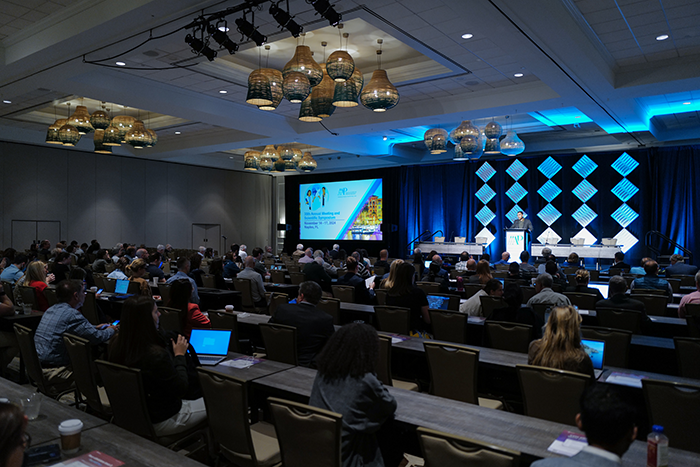
Symposium III - Beyond Abstinence: Measuring What Matters in Cannabis Use Disorder Medication Development
Scheduled for Saturday, November 14, 2026, 8:45 AM - 10:25 AM
Chairperson: Christina Brezing, MD, Assistant Professor, Columbia University Irving Medical Center/New York State Psychiatric Institute
Presenters: Frances Levin, MD, Columbia University Irving Medical Center/Kennedy-Leavy Professor of Psychiatry; Margaret Haney, PhD; Christina Brezing, MD, Assistant Professor, Columbia University Irving Medical Center/New York State Psychiatric Institute; and John Mariani, MD, Professor of Clinical Psychiatry, Columbia University/NYSPI
Cannabis use disorder (CUD) is an increasingly urgent clinical challenge in the context of expanding legalization, rising product potency, and greater prevalence of daily use. Despite advances in psychosocial treatments, many patients continue to experience persistent symptoms, and pharmacotherapy development has lagged behind other substance use disorders. A key barrier has been the field’s reliance on abstinence as the primary outcome. While abstinence remains an important goal, it is often difficult to achieve, may not reflect patient-centered goals, and can obscure meaningful improvements in functioning and psychiatric symptoms.
This symposium will highlight emerging research that critically examines abstinence-focused endpoints and proposes a shift toward reduction-based frameworks. Presentations will address methodological challenges in CUD trials, including variability in defining abstinence and limited incorporation of patient motivation. Data will be presented demonstrating that reductions in cannabis us are associated with clinically meaningful improvements in quality of life and psychiatric outcomes. Additionally, we will review current clinical treatment strategies towards reduction in use.
Drawing on lessons from alcohol and tobacco research, this symposium will introduce standardized, reduction-based metrics as a complementary approach to evaluating treatment efficacy. Attendees will gain practical insights into how these frameworks can improve interpretation of clinical trial results and inform more patient-centered care.
By reframing how treatment success is defined, this symposium aims to advance research methodology, enhance clinical decision-making, and support the development of more effective interventions for CUD. Participants will leave with actionable strategies to incorporate reduction-based approaches into both clinical practice and research design.
Learning Objectives:
- Evaluate the limitations of abstinence-based endpoints in cannabis use disorder (CUD) clinical trials and interpret findings from recent large pharmacotherapy studies using alternative outcome frameworks.
- Discuss how to apply reduction-based metrics (e.g., frequency, quantity, and patterns of cannabis use) to assess clinically meaningful change and link reductions in use to psychiatric, functional, and medical outcomes, including emerging cardiovascular risk data.
- Integrate patient-centered, reduction-oriented approaches into clinical management of CUD by developing individualized treatment plans, incorporating behavioral and pharmacologic strategies, and aligning treatment goals with patient motivation and real-world practice.
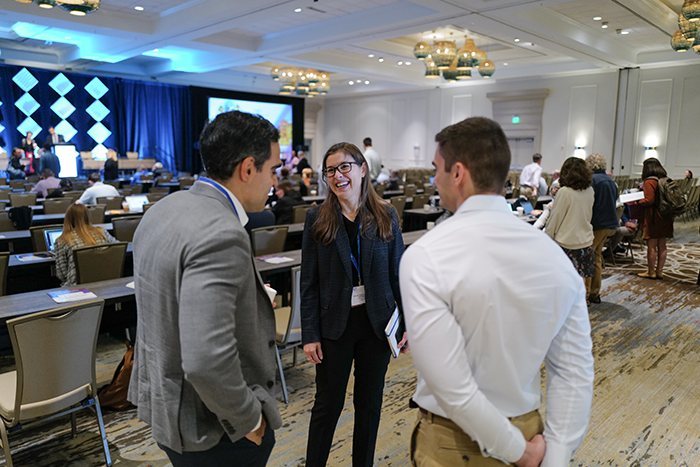
Mini Symposium - Tobacco Use and Its Impact on Psychiatric Symptoms and the Recovery from Other Substance Use Disorders
Scheduled for Thursday, November 12, 2026, 1:30 PM - 2:30 PM
Chairperson: Maher Karam Hage, MD, Professor, Anderson Cancer Center
Presenters: Jill Williams, MD, Professor of Psychiatry, Rutgers-RWJ Medical School; Brian Hurley, MD, Medical Director of Substance Abuse Prevention and Control, Los Angeles County Department of Public Health; and Tony George, MD, Professor of Psychiatry, University of Toronto and CAMH
This symposium will address the comorbidity of tobacco use (smoking in particular) with psychiatric disorders and symptoms, highlighting the impact of psychiatric symptoms on the ability to quit using tobacco and conversely continued tobacco use on the severity of psychiatric symptoms. We will explore the impact of continuing to use tobacco on the ability to abstain and recover from other substances of use.
Learning Objectives:
- Quantify the impact of baseline psychiatric symptoms on the ability to quit smoking.
- Gain understanding on building clinic capacity to identify patients with tobacco use disorder.
- Evaluate the effect of controlled cannabis abstinence among patients with depression and schizophrenia.